ASCO Transfer Switch Manual: A Comprehensive Guide
This manual details ASCO automatic transfer switches, covering installation, operation, safety, and troubleshooting for models like 165, 300, and 7000 series.
Understanding ASCO Transfer Switches
ASCO transfer switches are critical components in backup power systems, automatically switching between utility power and a generator source during outages. These switches, like the Series 165, 300, and 7000, ensure uninterrupted power supply to essential loads. Understanding their function is paramount for safe and effective operation.
The core purpose of an ASCO transfer switch is to provide a reliable and seamless transition of power. They are designed for various applications, from residential homes utilizing 240V AC with 2-wire generators to larger commercial and industrial facilities. Proper installation, adhering to safety guidelines, and regular maintenance are vital for optimal performance and longevity of these systems. This guide provides comprehensive information for owners and technicians.
What is an Automatic Transfer Switch (ATS)?
An Automatic Transfer Switch (ATS) is a device that automatically switches a load between two power sources – typically utility power and a standby generator. Unlike manual transfer switches, an ATS operates without human intervention, ensuring rapid and reliable power restoration during outages; ASCO specializes in manufacturing these crucial components for diverse applications.
The primary function of an ATS is to detect a loss of utility power and signal the generator to start. Once the generator is online, the ATS transfers the electrical load, providing uninterrupted power. When utility power returns, the ATS automatically switches the load back to the utility source, and signals the generator to shut down. This automated process enhances safety and minimizes downtime, making ATS systems essential for critical infrastructure.
ASCO Series Overview: 165, 300 & 7000
ASCO offers a range of transfer switch series to meet varying power needs. The Series 165 is designed for residential and light commercial applications, handling 100, 200, or 230 amps for single-phase 240V AC systems with 2-wire automatic start generators. It’s a compact and cost-effective solution.
The Series 300 caters to broader commercial and industrial requirements, available in sizes from 30 to 400 amps. It provides enhanced flexibility and features. Finally, the Series 7000 is engineered for high-demand applications, offering advanced capabilities and scalability. These switches are factory-wired and tested, ensuring reliable performance. Each series provides a robust solution for automatic power transfer, prioritizing safety and efficiency.
Key Components of an ASCO Transfer Switch
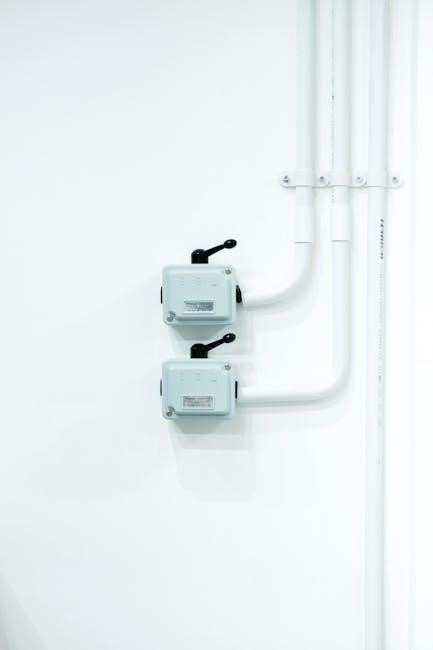
ASCO transfer switches comprise several crucial components working in unison. The core is the switching mechanism, enabling seamless transition between utility and generator power. A controller manages this process, monitoring power sources and initiating transfers based on pre-set parameters. Customer connection terminals facilitate secure wiring for load and source connections.
Essential elements include the operating mechanism, ensuring reliable switching, and indicator lights displaying switch status. Enclosures protect internal components from environmental factors. The ASCO 7000 series features clearly labeled terminals for normal and emergency power connections, alongside transfer control and lighting indicators. Proper understanding of these components is vital for effective installation and maintenance.

Installation Procedures
Proper installation involves mounting, connecting power conductors with safety as a priority, establishing line and auxiliary connections, and adhering to cable installation best practices.
Mounting the ASCO Transfer Switch
Securely mounting the ASCO transfer switch is crucial for reliable operation and safety. The ASCO 300 Series, for example, must be mounted vertically to a rigid supporting structure. Ensure the chosen location provides adequate space for connections and future maintenance access.
Before mounting, verify the supporting structure can handle the switch’s weight, especially considering the potential strain from cable pulling. Use appropriate mounting hardware, ensuring it’s compatible with both the switch and the mounting surface.
Proper alignment is essential; a misaligned switch can cause operational issues. Double-check that the switch is level and firmly attached before proceeding with any electrical connections. Refer to the specific model’s instructions for detailed mounting guidelines and torque specifications.
Connecting Power Conductors: Safety First
Prioritize safety when connecting power conductors to the ASCO transfer switch. Absolutely do not connect any conductors until they have been thoroughly tested to confirm they are de-energized. This is a critical step to prevent electrical shock and damage to the equipment.
Cable installation, particularly when using conduit or cable troughs, requires careful attention. Excessive force during cable pulling can compromise insulation and strand conductors, creating a safety hazard. After pulling cables, inspect them meticulously for any signs of damage.
Always adhere to local electrical codes and regulations. Use appropriately sized conductors and terminals, ensuring secure connections to prevent overheating and potential fire risks. Double-check all connections before energizing the system.
Line and Auxiliary Connections
Establishing proper line and auxiliary connections is crucial for the ASCO transfer switch’s functionality. Line connections involve linking the utility power source and the emergency power source (generator) to the designated terminals within the switch. Ensure correct phasing and polarity during these connections to avoid damage.
Auxiliary connections facilitate communication and control features. These include connections for remote monitoring, automatic start signals for generators, and alarm outputs. Refer to the wiring diagrams provided in the manual for specific terminal assignments.
The ASCO 7000 Series, for example, features clearly labeled customer connection terminals for load power, normal power, and emergency power. Proper connection of these terminals ensures seamless power transfer during outages.
Cable Installation Best Practices
Proper cable installation is paramount for a reliable ASCO transfer switch system. When routing cables through conduit, cable troughs, or hangers, exercise caution to avoid damaging insulation. Excessive force during cable pulling can stretch or break conductor strands, compromising safety and performance.
After cables are pulled into position, thoroughly inspect them for any signs of damage. Ensure sufficient slack is left at connections to prevent strain. Use appropriate cable supports to maintain proper cable alignment and prevent sagging.
Adhering to National Electrical Code (NEC) guidelines is essential. Correct cable sizing, grounding, and securing methods contribute to a safe and long-lasting installation. Careful planning and execution minimize potential issues.

Operational Guidelines
ASCO transfer switches seamlessly manage power, automatically switching between utility and generator sources, ensuring uninterrupted power during outages.
Normal Utility Power Operation
During standard conditions, the ASCO transfer switch maintains a closed connection to the primary utility power source, directly supplying electricity to the connected load. The generator connection remains open and isolated, ensuring it isn’t unnecessarily activated. Control circuitry continuously monitors the utility voltage and frequency, verifying stable power delivery.
The switch’s internal mechanisms are designed to remain in this position unless a significant power disruption is detected. Indicator lights typically confirm the utility power is active and the generator is in a standby state. Proper operation relies on a consistent and reliable utility feed, allowing the ASCO switch to function as a passive conduit for electricity. Regular checks of the utility supply are recommended to ensure optimal performance and prevent unexpected transfers.
Generator Backup Operation
When the ASCO transfer switch senses a utility power failure, it initiates a pre-programmed time delay to confirm the outage isn’t temporary. After this delay, the switch automatically opens the connection to the utility and closes the circuit to the generator. This transfer is seamless, minimizing interruption to the connected load.
The generator then begins supplying power, and the transfer switch maintains this configuration until utility power is restored to stable levels. Once detected, another time delay activates before switching back to the utility source, ensuring a consistent power supply. Indicator lights clearly display when the generator is actively powering the load. Proper generator sizing and maintenance are crucial for reliable backup operation.
Transfer Switch Control & Lights
ASCO transfer switches feature intuitive controls and indicator lights providing clear operational status. Typically, a manual override switch allows for testing the system or forcing a transfer to generator power. Indicator lights signal utility power present, generator power present, automatic operation, and transfer position – clearly showing which source is active.

Some models include a control circuit terminal block for remote monitoring and control capabilities. Understanding the meaning of each light is vital for quick troubleshooting. Regular inspection of these indicators ensures the switch is functioning correctly. Refer to the specific model’s documentation for detailed explanations of control functions and light patterns.
Understanding Time Delays
ASCO transfer switches incorporate adjustable time delays crucial for reliable operation and preventing nuisance transfers. A short time delay after utility power loss ensures the generator stabilizes before connecting the load, protecting sensitive equipment. Conversely, a retransfer delay prevents the switch from immediately reverting to utility power if it’s unstable after an outage.

These delays are typically adjustable via dip switches or potentiometers, allowing customization for specific application needs. Proper time delay settings minimize stress on the generator and ensure a seamless power transition. Refer to the manual for recommended settings and adjustment procedures, as incorrect settings can compromise system performance.
Safety Precautions
Always prioritize safety when installing and maintaining ASCO transfer switches; disconnect power before working, test conductors, and follow all electrical codes.
General Safety Warnings
Critical safety precautions must be observed during the installation and servicing of ASCO automatic transfer switches. Disconnect and lock out all power sources – both utility and generator – before commencing any work on the switch or connected wiring. Qualified personnel, familiar with applicable electrical codes and safety practices, should perform all installations and maintenance.
Never attempt to work on energized circuits. Always verify the absence of voltage using appropriate testing equipment. Improper installation or maintenance can create hazardous conditions, potentially leading to electrical shock, fire, or equipment damage. Ensure the transfer switch is mounted securely to a rigid supporting structure, adhering to the manufacturer’s recommendations. Carefully read and understand all instructions and warnings provided in this manual before proceeding with any work. Failure to follow these guidelines could result in serious injury or death.
Testing Power Conductors Before Connection
Before connecting power conductors to the ASCO Series 300 transfer switch, rigorous testing is absolutely essential. Verify that all power sources are de-energized and locked out according to established safety procedures. Use a calibrated voltmeter to confirm the absence of voltage on each conductor. This step prevents accidental contact with live circuits during the connection process, mitigating the risk of electrical shock and equipment damage.
Inspect the insulation of each conductor for any signs of damage or wear. Damaged insulation must be repaired or replaced before making any connections. Ensure conductors are properly sized for the intended load and comply with all applicable electrical codes. Improperly sized conductors can overheat and create a fire hazard. Thorough testing and inspection are paramount for a safe and reliable installation.
Working with Electrical Systems
Installation and maintenance of ASCO transfer switches necessitate strict adherence to electrical safety protocols. Only qualified personnel with demonstrable experience in electrical systems should undertake these tasks. Always de-energize circuits before working on them, utilizing appropriate lockout/tagout procedures to prevent accidental energization. Wear personal protective equipment (PPE), including insulated gloves and safety glasses, to minimize the risk of electrical shock and arc flash.
Be mindful of potential hazards associated with cable handling, as pulling cables can damage insulation. Inspect all connections for tightness and proper grounding. Familiarize yourself with local electrical codes and regulations to ensure compliance. Prioritize safety at every stage of the process, recognizing the inherent dangers of working with electricity.

Technical Specifications
ASCO transfer switches offer diverse voltage and current ratings, alongside defined operating temperatures, detailed in specifications for the 3ATS and 7000 series.
Voltage and Current Ratings
ASCO transfer switches accommodate a broad spectrum of electrical needs, offering models rated for 100, 200, or 230 amps, specifically designed for single-phase 240V AC applications. The Series 165 is particularly suited for use with 2-wire automatic start generators. Furthermore, the Series 300 extends the range, encompassing sizes from 30 to 400 amps, providing scalability for various power requirements.
The larger ASCO 7000 Series is capable of handling even greater loads, reaching up to 3000 amps, making it ideal for critical infrastructure and industrial applications. These ratings ensure compatibility with diverse generator setups and utility power sources. Careful consideration of the load requirements is crucial when selecting the appropriate transfer switch to guarantee safe and reliable operation.
Operating Temperatures
ASCO transfer switches are engineered for reliable performance across a defined temperature range, ensuring consistent operation in diverse environmental conditions. While specific temperature limits vary by model, generally, these switches are designed to function effectively in ambient temperatures typically ranging from -40°C to 60°C (-40°F to 140°F).
However, it’s crucial to consult the specific datasheet for the particular ASCO series (e.g., 165, 300, or 7000) to confirm the exact operating temperature specifications. Exceeding these limits can potentially compromise the switch’s performance and lifespan. Proper ventilation and protection from direct sunlight or extreme heat sources are recommended to maintain optimal operating conditions and ensure long-term reliability.
ASCO 3ATS Specifications
The ASCO 3ATS series encompasses G-design transfer switches, ranging from 1600 to 3000 Amps, designed for robust and reliable power transfer. These switches are available in various configurations to suit diverse application needs, including open transition (OT) and closed transition (CT) designs. Voltage ratings typically accommodate 120/240V and 480V systems, while current ratings extend up to 3000 Amps, catering to both small and large-scale power requirements.
Key features include a compact design, enhanced arc flash protection, and customizable control options. The 3ATS series is often utilized in critical infrastructure applications, such as healthcare facilities and data centers, where uninterrupted power supply is paramount; Detailed specifications, including enclosure types and accessory options, are available in the official ASCO 3ATS product documentation.
ASCO 7000 Series Specifications
The ASCO 7000 Series Automatic Transfer Switches (ATSs) are factory-wired and tested, offering a broad range of configurations for diverse power transfer needs. These switches support voltage ratings from 208V to 600V and current capacities extending up to 4000 Amps, making them suitable for large commercial and industrial applications. Available in open or closed transition designs, the 7000 series prioritizes reliability and performance.
Key features include advanced microprocessor control, enhanced monitoring capabilities, and customizable settings for precise power management. They often incorporate features like programmable time delays and remote communication options. The series is designed for easy installation and maintenance, with readily accessible customer connection terminals. Detailed specifications, including enclosure options and accessory compatibility, are found in the official ASCO 7000 Series documentation.
Troubleshooting & Maintenance
Routine checks and addressing common issues—like control failures—ensure optimal ASCO transfer switch performance and longevity, safeguarding power reliability.
Common Issues and Solutions
Control circuit failures are frequently encountered, often stemming from loose connections or faulty components; verifying wiring and replacing damaged parts resolves this. Transfer failures, where the switch doesn’t switch between utility and generator power, can indicate issues with the sensing circuit or the transfer mechanism itself – a thorough inspection is crucial.
Time delay malfunctions might cause premature or delayed transfers; recalibrating the timer or replacing the timing module addresses this. Generator start failures, though not directly a switch issue, can be linked to incorrect wiring or a lack of signal from the transfer switch; confirm proper signaling.
Overheating, while rare, suggests excessive load or poor ventilation; reduce the load or improve airflow. Always prioritize safety when troubleshooting, disconnecting power before inspecting internal components. Regular maintenance, as outlined in the manual, prevents many of these issues.
Routine Maintenance Checks
Regular visual inspections are paramount; check for loose connections, corrosion, and any signs of damage to wiring and components. Test the transfer switch monthly under load – simulate a power outage to ensure seamless transition between utility and generator power. Verify proper operation of all control lights and indicators, noting any discrepancies.
Clean the interior annually, removing dust and debris that can accumulate and impede performance. Inspect and tighten all mechanical linkages, ensuring smooth and reliable operation of the transfer mechanism. Lubricate moving parts as recommended by the manufacturer to prevent wear and tear.
Review the manual periodically to refresh your understanding of the switch’s operation and maintenance requirements. Document all maintenance activities for future reference and troubleshooting.
Customer Connection Terminals
ASCO transfer switches feature clearly labeled customer connection terminals for simplified installation. These terminals facilitate connections for line (utility) power, load (connected equipment), and generator power sources. Proper identification of each terminal is crucial to avoid miswiring and potential damage.
Refer to the wiring diagram provided with your specific ASCO model to accurately identify each terminal’s function. Ensure all connections are tight and secure, using appropriately sized wire and connectors. The 7000 Series, for example, has a dedicated customer terminal block for load power connections.
Double-check all wiring before energizing the system. Incorrect connections can lead to equipment malfunction or safety hazards. Consult a qualified electrician if you are unsure about any aspect of the connection process.